SaaS SEO for Developer Products: Pricing, Compare Pages, Docs, and Blog
A practical SEO framework for developer-focused SaaS products and boilerplates: metadata, schema, comparison pages, docs, internal links, and content strategy.
Developer products often underinvest in SEO because the team is focused on code, launches, and communities. That is understandable, but search is where high-intent buyers compare options.
For a SaaS boilerplate or developer tool, SEO should focus on proof, comparison, and implementation detail.
Start with Technical Hygiene
Every public page should have:
- Title.
- Description.
- Canonical URL.
- Open Graph image.
- Twitter card metadata.
- Sitemap inclusion.
- Correct robots behavior.
- Fast loading.
- Mobile-safe layout.
Protected pages should be excluded:
- Sign-in.
- Sign-up.
- Dashboard.
- Admin.
- API-only routes.
Do not let auth and app-only pages compete with marketing pages.
Add Schema Where It Matches Intent
Useful schema types:
Organizationon the site.WebSiteon the site.Producton pricing and comparison pages.FAQPagefor pricing, compare, and FAQ sections.BlogPostingfor articles.BreadcrumbListfor nested pages.
Schema is not magic, but it helps search engines understand page purpose.
Build High-Intent Pages
For developer products, high-intent pages include:
- Pricing.
- Compare.
- Docs.
- Getting started.
- Deployment.
- Auth setup.
- Billing setup.
- Feature-specific pages.
Generic thought leadership is less important than pages that answer buying and implementation questions.
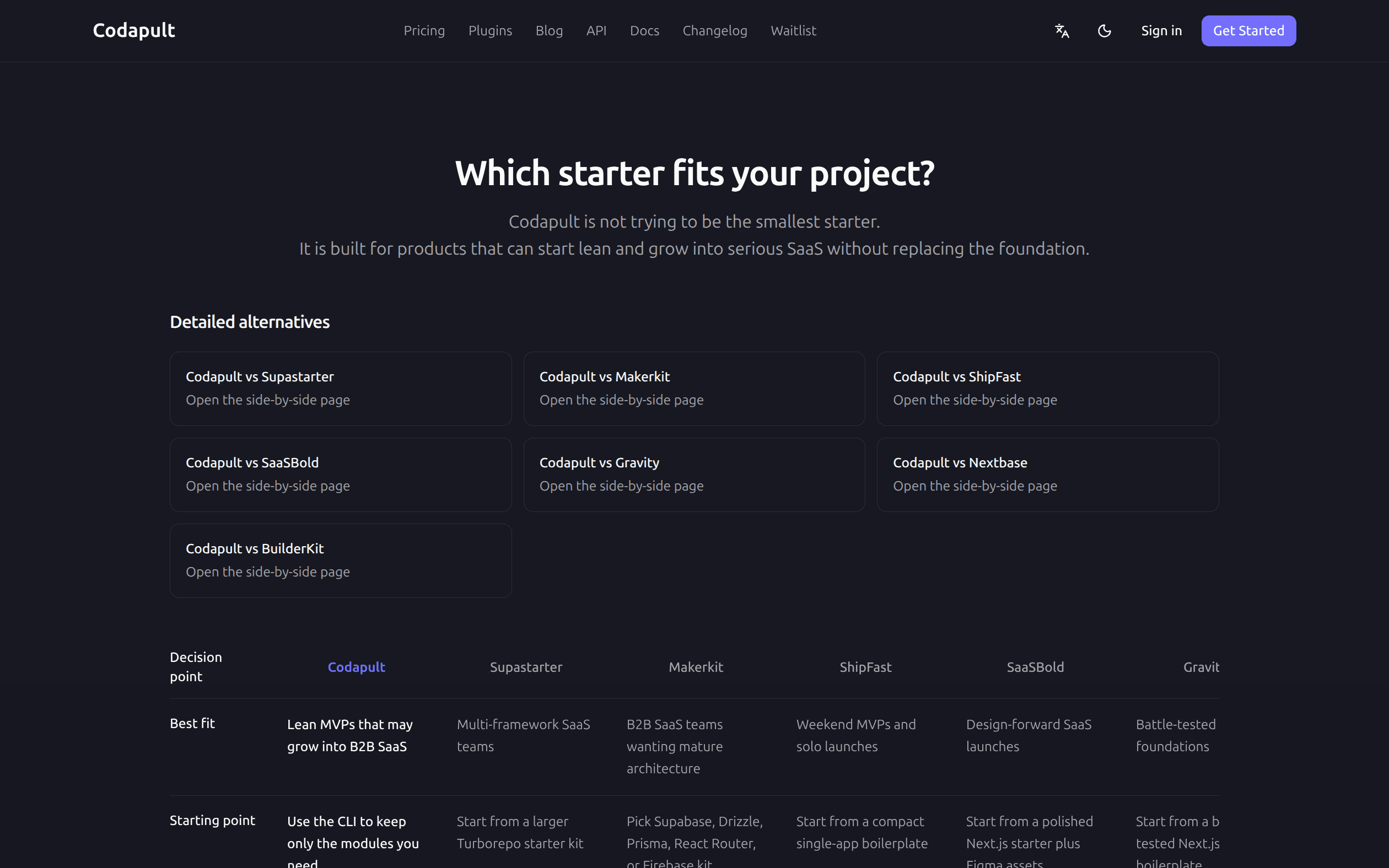
Comparison Pages Should Be Specific
A useful comparison page should explain:
- Best fit.
- Starting point.
- Auth and teams.
- Billing.
- Enterprise readiness.
- Infrastructure.
- Extensions.
- Pricing.
- Support.
Avoid vague claims like "more powerful" or "better developer experience" unless you explain why.
Internal Links Need a Job
Internal links should help users move from broad intent to specific answers:
- Homepage to pricing.
- Homepage to compare.
- Compare to
/compare/*pages. - Blog posts to docs.
- Docs to pricing when buyer intent is clear.
- Pricing to FAQ anchors.
Do not bury high-intent pages behind navigation only.
Blog Topics Should Match Search Intent
For SaaS boilerplates, strong topics include:
- "Next.js SaaS boilerplate checklist".
- "B2B SaaS starter architecture".
- "Auth and RBAC in Next.js SaaS".
- "SaaS billing models".
- "AI SaaS features".
- "SaaS admin dashboard".
- "Deploying Next.js SaaS".
- "Plugin architecture".
Each topic should answer a real pre-purchase or implementation question.
Docs Are SEO Assets
Docs are not only for existing users. They prove technical depth.
Good docs show:
- How to configure providers.
- How modules fit together.
- How to deploy.
- How to test.
- How to remove or extend features.
- What env vars mean.
Buyers often inspect docs before purchasing developer products.
Localized Content Strategy
If the product has multiple UI locales, you do not automatically need to translate every long-form article on day one.
A practical approach:
- Translate core product pages.
- Translate getting-started content if a locale already has demand.
- Keep deep technical blog posts in English until search data justifies translation.
- Avoid low-quality machine translations for complex implementation content.
Quality beats locale count.
Measure What Matters
Track:
- Impressions for high-intent keywords.
- Click-through rate on compare/pricing pages.
- Blog to pricing clicks.
- Docs to purchase clicks.
- Conversion by landing page.
- Pages that rank but do not convert.
SEO should inform product positioning, not just traffic reports.
The Practical Goal
Developer SEO works when the content proves that the product is real, current, and technically credible.
Answer the questions buyers already have, link the answers together, and keep the pages accurate as the product changes.
Codapult ships with the full SEO layer described here: JSON-LD, per-page metadata, Open Graph images, canonical URLs, sitemap generation, comparison pages, RSS, ,/llms.txt and a blog and docs engine built on MDX — so you start with technical hygiene already in place. The content system docs cover the editable pieces.