B2B SaaS Starter Architecture: What to Get Right Before Launch
A practical architecture guide for teams building B2B SaaS products with Next.js, organizations, roles, billing, audit logs, and admin workflows.
B2B SaaS architecture is mostly about avoiding expensive changes later. The first version can be simple, but the foundation needs room for teams, billing, support, compliance, and enterprise requests.
This is the baseline architecture we recommend before launch.
Model the Customer as an Organization
Even if the first buyer is a single founder, create an organization record. A user can own or belong to one or more organizations, and product data belongs to the organization.
That gives you a clean path for:
- Inviting teammates.
- Changing ownership.
- Billing the company instead of a person.
- Showing organization-level analytics.
- Adding SSO later.
- Exporting or deleting organization data.
Do not attach every important record directly to userId unless it is truly personal.
Separate Platform Roles from Organization Roles
There are two different permission systems:
- Platform role: what a user can do across the whole app.
- Organization role: what a user can do inside one customer workspace.
An admin support user may be a platform admin without being a member of every customer organization. A customer owner may control billing and members for one organization without seeing platform admin screens.
Keep those concepts separate.
Billing Should Reference the Organization
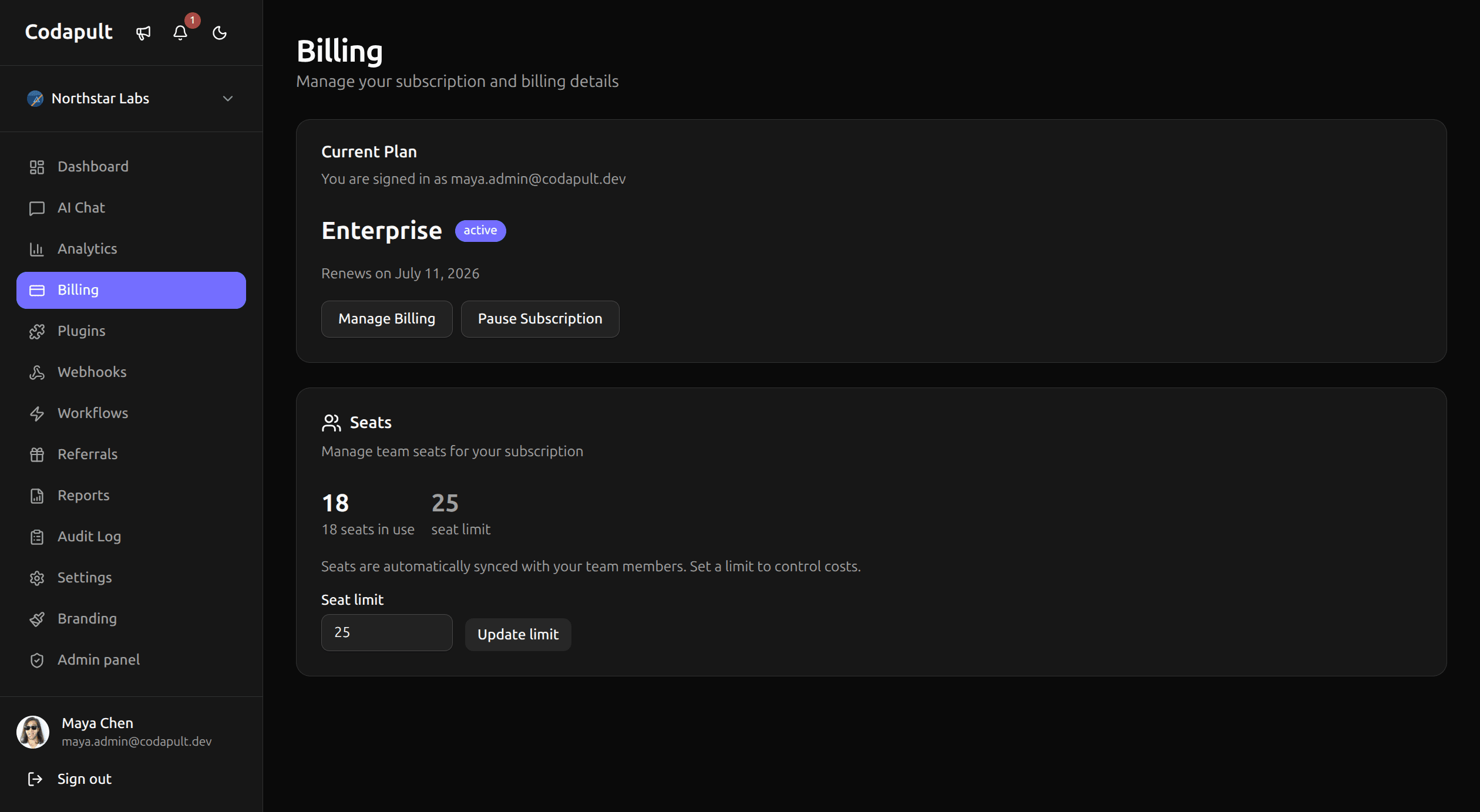
Subscription records should be able to point at the paying organization. A B2B customer may have many users, but one billing relationship.
The subscription layer should store:
- Provider.
- Customer ID.
- Subscription ID.
- Plan ID.
- Status.
- Seat count.
- Seat cap.
- Current period.
- Trial end.
- Cancellation state.
This lets your app render billing state without calling the payment provider on every request.
Admin Support Needs Its Own Workflows
Customer-facing product screens are not enough. You need internal tools for:
- Finding a user.
- Checking subscription state.
- Reviewing recent activity.
- Retrying failed webhooks.
- Toggling features.
- Investigating errors.
- Exporting data.
If support has to query the database manually, your product is not ready for scale.
Audit Logs Should Start Small but Early
Audit logs do not need to capture every click. Start with actions that affect security, billing, permissions, and customer data:
- User role changed.
- Member invited.
- Member removed.
- Subscription changed.
- SSO configured.
- API key created.
- Webhook retried.
- Data export requested.
Add metadata, IP address, actor, resource, and timestamp. That is enough for many support and compliance questions.
Feature Flags Need Ownership
Feature flags are not only for experiments. They protect launches.
Use flags for:
- Rolling out risky product changes.
- Enabling modules for specific customers.
- Testing new pricing.
- Hiding unfinished integrations.
- Responding quickly when a feature misbehaves.
Every flag should have a name, description, enabled state, and rollout percentage.
Webhooks Need Delivery State
If your SaaS sends events to customers or receives billing provider events, you need delivery records.
Track:
- Target URL.
- Event type.
- Status code.
- Attempts.
- Next retry time.
- Response body.
- Error message.
- Dead-letter state.
Webhook failures are normal. Invisible webhook failures become support incidents.
Analytics Should Be Organization-Scoped
For B2B SaaS, product analytics should answer organization-level questions:
- Which accounts are active?
- Which features are used?
- Which pages drive activation?
- Which users are blocked?
- Which plans generate the most usage?
Store organizationId on events when possible. User-level analytics alone is not enough.
Final Shape
A strong B2B SaaS starter has a clear spine:
- Users authenticate.
- Users belong to organizations.
- Organizations own product data.
- Organization members have roles.
- Subscriptions attach to organizations.
- Admin workflows operate the platform.
- Audit logs explain sensitive changes.
- Analytics and webhooks are organization-scoped.
That architecture is still lean, but it will survive the first enterprise customer.
If you want this architecture ready before you write the first line of product code, Codapult ships with organizations, roles, organization-scoped billing, audit logs, webhooks, feature flags, and admin workflows already wired together. The project structure docs show where those modules live.